3D Flower Quilling Car Coaster Template4 Review
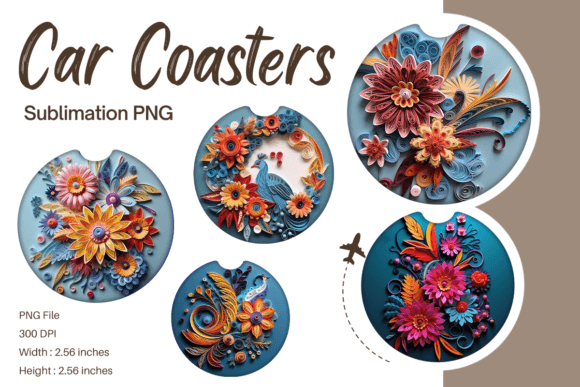
As a designer who spends half my day staring at stitch charts and the other half worrying about whether a client’s logo will hold up after twenty wash cycles, I don’t just look for pretty pictures. I look for viability. When I first pulled up 3D Flower Quilling Car Coaster Template4, my initial reaction was a mix of curiosity and caution. The name itself suggests a specific aesthetic—layered, dimensional, and intricate—which immediately raises the stakes for any embroidery execution. This isn’t a simple monogram or a basic geometric shape; it is a Print Templates asset designed to mimic the delicate art of quilling through digital means, intended for sublimation on car tags and coasters.
However, the reality of using this design in an actual embroidery project requires a different lens. While the listing explicitly states this is NOT A SVG file and is meant for sublimation, many creative entrepreneurs and Etsy sellers often look for ways to adapt high-quality graphic assets into stitched products. If you are considering how this visual concept translates to thread, or if you are evaluating the design’s potential for a broader range of applications beyond its intended sublimation use, this review breaks down the practical realities of working with such detailed floral concepts in machine embroidery.
The Visual Personality and First Impressions
The mood created by the 3D Flower Quilling Car Coaster Template4 is undeniably elegant and tactile. Quilling art relies on the illusion of depth created by rolling and shaping paper strips. In a graphic format, this translates to rich layering and soft gradients that suggest volume. For a handmade product, this visual weight is appealing because it promises a finished piece that looks expensive and carefully crafted. It feels like a personalized gift that would sit proudly on a dashboard or a coffee table, rather than something mass-produced.
But here is where the designer in me has to pause. Translating the smooth curves and subtle shadows of a quilling-style graphic into stitch density is a significant challenge. A standard machine embroidery design uses fills and satin stitches to create texture. To achieve a "quilled" look in thread, you would need a very sophisticated combination of fill stitch variations and perhaps even some running stitch details to simulate the edges of the rolled paper. Without that level of complexity, the design risks looking flat or muddy when stitched out.
Real-World Application: From Digital Asset to Stitched Reality
Let’s imagine a real scenario. You are preparing a boutique collection for the upcoming holiday season. You want to create a set of custom apparel items, perhaps embroidered tote bags or sweatshirt patches featuring this floral motif. The 3D Flower Quilling Car Coaster Template4 offers a strong central focal point. However, because the original template is designed for car coasters—a small, flat surface—the composition might feel too dense if scaled up for a larger garment without losing detail.
If you were to use this as a reference for an applique design, the results could be stunning. By cutting out the flower shapes from contrasting fabrics and stitching them down with a fine satin stitch, you can replicate the layered look of the digital template without fighting the limitations of thread color blending. This approach works exceptionally well for baby embroidery items, where durability and softness are paramount, or for kitchen towels and tea towels where the design adds a touch of farmhouse chic.
For commercial embroidery projects, such as embroidered patches for denim jackets or caps, the intricate nature of the quilling style demands precision. A poorly executed version could look cluttered. But done correctly, with high-quality threads and proper stabilization, it elevates the perceived value of the finished product. Customers are willing to pay more for items that look custom and complex, provided they don’t fall apart after a few weeks.
Where Caution Is Required
Not every fabric or hoop size is friendly to this type of detailed design. There are several scenarios where using a design inspired by 3D Flower Quilling Car Coaster Template4 could lead to frustration:
- Small Hoop Sizes: If the design is too intricate for the available hoop space, you may find yourself constantly re-hooping, which increases the risk of misalignment. Always check the hoop size requirements before committing to a production run.
- Textured or Stretchy Fabrics: Trying to stitch fine details onto a thick fleece or a stretchy jersey knit can cause puckering or distortion. The delicate lines of a quilling pattern will warp if the fabric doesn’t lie flat. Use a sturdy stabilizer and consider cut-away backing for these materials.
- Dense Stitch Areas: If the design calls for heavy coverage, thin fabrics may become stiff and uncomfortable. This is particularly important for apparel decorators working with lightweight t-shirts or baby clothes, where hand-feel is critical.
- Curved Surfaces: While the template is great for flat coasters, adapting it to curved surfaces like baseball caps requires careful digitizing to account for the curvature. Otherwise, the "3D" effect might look distorted.
Practical Designer Notes for Implementation
Before you rush to print or stitch, there are essential steps to ensure your craft business remains professional and profitable. First, always test the design on scrap fabric that matches your final material. This allows you to evaluate the thread colors and see how the light interacts with the stitch direction. A dark background might swallow up the lighter details of the quilling effect, while a light background might make the design look washed out.
Review the stitch density closely. If the original digital asset is too detailed, you might need to simplify certain elements during the digitizing process. Don’t be afraid to remove tiny decorative accents that won’t survive the washing machine. A small shop product should be durable as well as beautiful.
Additionally, inspect the design in black and white mockups. This helps you understand the contrast and balance of the shapes without being distracted by color. It also ensures that the design works for customers who prefer neutral palettes. Finally, confirm licensing terms. Since this is a digital download and not a standard embroidery file, you must verify whether you have the right to use the underlying artwork for commercial purposes, especially if you are creating printable mockups or selling physical goods.
Final Verdict on Visual Appeal and Value
The 3D Flower Quilling Car Coaster Template4 succeeds in creating a sense of luxury and intricacy. For designers looking to add a touch of elegance to their design assets, it provides a strong foundation. Whether you are creating holiday embroidery collections, wedding favors, or personalized gifts, the quilling aesthetic resonates with buyers who appreciate handmade quality.
However, success lies in adaptation. It is not a plug-and-play solution for every machine or fabric. It requires thoughtful digitizing, careful material selection, and a willingness to experiment. When executed well, it transforms a simple graphics concept into a tangible, desirable handmade product that stands out in a crowded market. For the experienced maker who understands the nuances of thread and tension, this template offers a promising path to creating unique, high-value items that customers will love.